Monday, July 18, 2016

A few words about my trip to Lisbon.

It has been a few weeks since I got back from my trip to Portugal and I am already designing and conducting a whole new usability study  so, before I forget all about my vacation I wanted to post some pics. I attended the EAAE/ARCC Conference in Lisbon and presented my paper about the"Forest School".

The conference was held at the Faculty of Architecture and the University of Lisbon, which is located just north of the suburb of Belem, in a beautiful area on the outskirts of the city. The site is high enough on the hill to get a view of the River and at some points, the City of Lisbon itself.

The conference focused on the theme of “Architectural Research Addressing Societal Challenges”. I enjoyed the diverse keynotes, but I really connected with Galen Cranz' presentation called "Re naturalizing the City". It was about the history of urban parks in the United States and the impact of the design of the "chair" on human health. Fascinating. It kind of made you never want to sit in a regular chair again.

I also enjoyed Jan Masschelein's talk - "Addressing societal challenges: Reclaiming and designing (in)´school/ university´". It was a philosophical look at education. He explained a course he taught in Athens where he had students walk along arbitrary lines in the city and record various observations on a map. He talked about the process as a metaphor for learning, how students become knowledgeable through a systematic, facilitated process of careful observation discovery and collaboration.

Just a few of the many wonderful talks I attended:
  • Helena Machín, Jorge Almazán A study on the architectural evolution of art museums in japan since the second world war JAPAN
  • Deirdre Hennebury Architecture and Pedagogy in the Gallery Context USA
  • Milia Lorraine Khoury Architecture “with the Other 90%” an African Story SOUTH AFRICA
  • Madlen Simon Future Studio: preparing students for practice in the global context USA
  • V. Kaps, C. Martinez, J. Walsche, J. Soolep New Schools of Thought An inductive investigation on tendencies in architectural... LIECHTENSTEIN 
  • Maria Beltran Rodriguez, Madlen Simon The people’s park: a study of the relationship between design and conviviality in Superkilen USA 
  • Azza Kamal Re-naturalizing Urban Campuses: An Integrated design and Policy Framework USA 
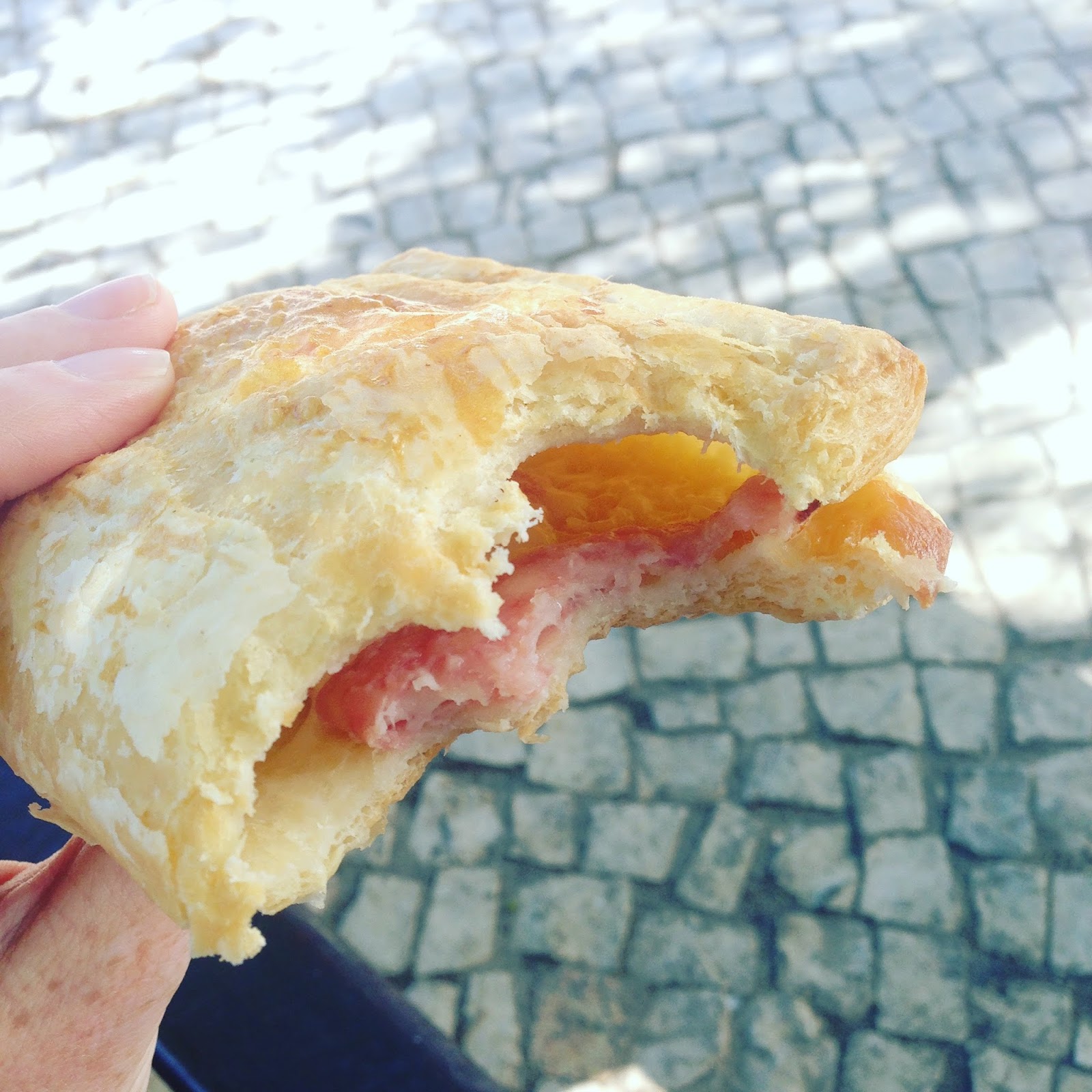
In Lisbon, I didn't get enough time to really explore, but I loved the amazing vibe of the city. I enjoyed the fish, the climate, the culture...and of course the pastries!! After the conference I did get to go on a short trip to the Algarves and had a lovely time there by the beach. The last pics blow are from that part of my trip.


Tuesday, July 12, 2016

The presentation I gave at the EAAE/ARCC Conference, Lisbon 2016

This is a version of the presentation I gave in Lisbon about the Forest School. It was well received and I connected with other academics who are interested in similar themes.

Wednesday, June 1, 2016

How I Map Random but Connected Ideas

Well, there is no doubt I am a visual thinker. I use Indesign as a cognitive mapping tool to arrange random thoughts and ideas. I have been writing approx 600 words a day since March 1st, and then going back and tagging ideas. I then use those tags to create cognitive maps of my thoughts. These may be disconnected and unorganized, but they start to form a picture and slowly but slowly I can start to see some threads that will become the beginnings of a project. This is the map as it stands, but it will definitely change, grow and be altered. Indesign is not a great tool for this, but I haven't found anything else that allows me to represent my ideas this way, so there yo have it. (PS. I like arrows.)


Monday, May 16, 2016

CHI - and Links


I have just returned from CHI in San Jose. CHI is the largest and most prestigious conference in HCI (Human-Computer-Interaction). I attended more amazing lectures than I can count. I am currently going through my bag of various cards and flyers from people I met. Here are some links to some inspiring people doing interesting research:

Annika Waern
  • https://annikawaern.wordpress.com/
  • I met Annika and her PhD student Jon Back in front of their poster presentation for "Designing Children’s Digital Physical Play in Natural Outdoor Settings". I was attracted to the poster because it showed kids playing in the woods with some large, but simple play installations. Their research on play and its role in urban space is interesting to me in relation to my work with the forest school.

I was captivated by these robots attending the conference alongside the rest of us. It was a surreal and futuristic experience to attend alongside these remotely operated participants.

Janet Read
  • http://www.uclan.ac.uk/staff_profiles/professor_janet_read.php
  • I attended Janet's course on research with children. She has extensive experience working on creating technologies in classrooms. As part of her discussion about ethics Janet spoke about classroom dynamics and how to run a study when you are alone with a class of 30 kids. She talked about using stations and having the children themselves act as researchers. 

I was inspired by this talk by Salman Khan about the Khan Academy. So inspired, in fact, that the day I got home our entire family started on the program. I am revisiting grade 8 math with enthusiasm!
Daniel Schien
  • http://www.bristol.ac.uk/engineering/people/daniel-schien/
  • Daniel and the other researchers at the University of Bristol have a focus on sustainability and technology. Working in visualizations, and data analytics they also look into energy consumption of buildings and how data visualizations can impact behaviors.

This is the San Jose Convention Center on a grey morning. It does get sunny in California FYI.
Enrico Costanza
  • http://www.ecs.soton.ac.uk/people/ec
  • Enrico gave a very interesting presentation about a digital data visualization display that shows the temperature inside a building. It was able to indicate when the building was hotter or colder than the policy directive and the study observed behavior changes due to the new information. 
Roberto Martinez-Maldonado


Market Street in San Jose was great for finding fish tacos!


Greg Walsh
  • http://www.ubalt.edu/cas/faculty/alphabetical-directory/greg-walsh.cfm
  • I met Greg in a co-design Special Interest Group for working with children. His work is with inner city kids in Baltimore, helping them learn programming and software design. He also has an interest in architectural co-design and how it has inspired HCI participatory design methods.
Andrew Kun
  • https://ceps.unh.edu/faculty/kun
  • Andrew is working with tabletop interactive surfaces for collaborative data analysis and collection. He is facilitating a workshop at a conference coming up directly related to tabletop surfaces (Something I definitely should attend). The conference is in Niagra Falls. http://iss2016.acm.org/


(Not going to lie, this opening presentation made me laugh. The robot on stilts was epic!)

Laura Sanely

Uta Hinrichs
Michael Mauderer


My brother and I on public transit to CHI!!
I want to read this book:
https://books.google.ca/books/about/Human_Computer_Interaction.html?id=k0kBgyCaokAC&source=kp_cover&redir_esc=y&hl=en

This App is really cool. For digitizing visual data. http://ivolver.cs.st-andrews.ac.uk/


One of my favorite Presentations:

Telling stories about dynamic networks with graph comics - Benjamin Bach, Natalie Kerracher, Kyle William Hall, Sheelagh Carpendale, Jessie Kennedy, Nathalie Henry
One of the best things about California. May is far too chilly for locals to swim in the heated pool. Bonus for Canadians looking for a private swim!!

Wednesday, April 6, 2016

Public engagement is a relationship building exercise.

Public engagement is a relationship building exercise. 

It is not just about collecting data. 

Data changes, it morphs, it adjusts depending on how it is collected and further as people get to know each other. 

Engagement is about building connections for multiple reasons. Engagement means that we find better data. It means that we ask the right questions, and it means that we build the human resources to actually carry out a new vision. It creates vision. It provides us with more than we put in. Without engagement there is no human network able to conceive of, let alone build something new.

Buildings and environments are physical manifestations of our societal values. 

This is why I find over emphasis on online surveys risky. They do very little to create connections and I think it is really difficult to get important information from them because you have no idea how much people know or what they are responding to. 

My preference at this point is for a multi-tiered approach that includes data collection, observation, large surveys, followed by interviews with experts, further face-to-face meetings and usability testing. Small focus groups are good as well as experiments and developing new methods to test out ideas. 

Too much focus on getting everyone in a room when there is no communal vision or relevant understanding is not helpful in my opinion, nor is too much reliance on technology, or superficial means to get surface level data.

Some of my current readings include:

Clark, A, and P Moss. 2012. Listening to Young Children: The Mosaic Approach. Jessica Kingsley Publishers.

Burke, Catherine. 2007. “The View of the Child: Releasing ‘visual Voices’ in the Design of Learning Environments.” Discourse: Studies in the Cultural Politics of Education 28 (3): 359–72.

Malczewski, Jacek, and Claus Rinner. 2015. “Multicriteria Decision Analysis in Geographic Information Science.” In Analysis Methods, 331.

Ferretti, Valentina, and Gilberto Montibeller. 2016. “Key Challenges and Meta-Choices in Designing and Applying Multi-Criteria Spatial Decision Support Systems.” Decision Support Systems 84: 41–52.